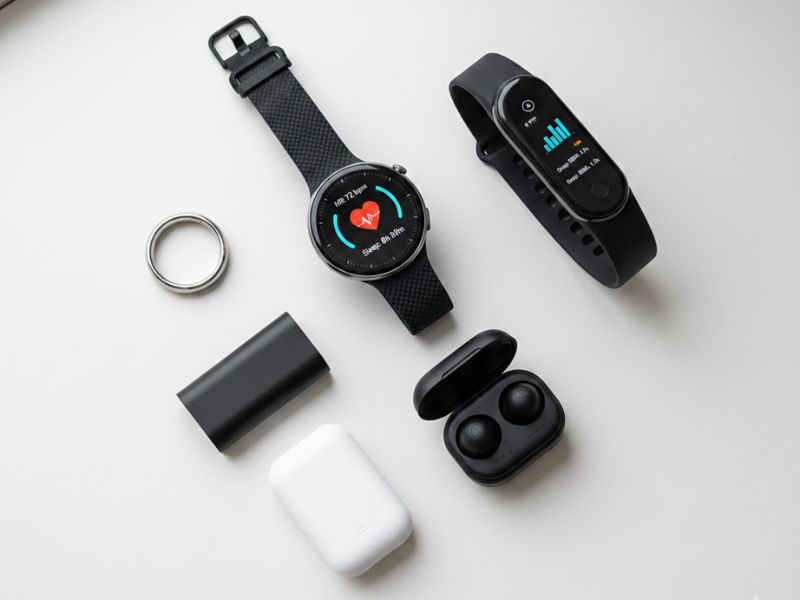
There’s no denying that Smartwatches and Wearables have completely transformed the workplace, as well as our personal lives, a phenomenon never imagined decades ago when powerful computing was confined to large desktop boxes. Watches aren’t just about telling time anymore. Now you can check on your health, keep that coach in your corner, and also make sure your friends are okay while keeping all of the virtual keys to the city. Whether you’re a fitness buff monitoring your morning runs, a workaholic juggling calls and messages, or someone devoted to knowing their health numbers, there’s a way for everyone to enjoy the freedom of these new wearable devices. There’s been an explosion of choices, from budget-friendly fitness bands to premium luxury smartwatches and everything in between, which means finding the best smartwatch for you has never been easier.
Understanding the Wearable Technology Revolution
Wearable tech is about more than just smartwatches. This encompasses fitness bands, smart rings, health trackers, and even smart clothes. Each device has a distinct function but contributes to your overall digital health and connectivity.
What Makes Modern Wearables Special
Current wearables are more like an extension of your smartphone, making the technology become one with our lives and keep us updated without requiring your phone in every pocket. And in fact, the sensors crammed into these little devices are remarkably sensitive. They can keep tabs on your heart rate, chart your sleep patterns, measure the oxygen levels in your blood, count how many steps you take, and calculate how many calories you consume and burn even alerting you to irregular heartbeats.
The Health Monitoring Advantage
Some of the more sophisticated models have gone on to add ECG features, stress measurement, and menstrual cycle tracking, turning them into a valuable all-around health companion. Once only available in medical facilities, these features are now right on your wrist and offer real-time information about how your body is performing.
Key Features to Look for in Modern Wearables
What to look for in a wearable. When it comes time to decide on your next body-worn accessory, certain key features deserve your attention. Battery life is still a critical factor from devices that last mere 24-hours to those that can go a week or longer between recharges. Display quality is a consideration as well; AMOLED screens provide intense colors and deep blacks, which are easy to see in bright sunlight.
Water Resistance and Durability
Another essential feature is water resistance, particularly if you’re an athlete who swims or does aquatic sports. Seek out those with a minimum of 5ATM water resistance, which means you can swim and shower without worry. GPS is a must-have feature for runners and cyclists who want to track their distance and route without lugging along a phone.
Smart Connectivity Options
You need to be able to work with your smartphone’s ecosystem. Certain wearables only interact with iOS or Android , while others work across both platforms. Verify app availability, third-party integrations, and if the device supports your favorite health or fitness apps before making a purchase.
Finding the Best Smartwatch Under Your Budget
As technology evolves and competition rises, been much easier to find the best smartwatch for X prices. Finally, we’ve seen some really amazing tech that was previously only available on premium handsets making its way down to budget devices. There are competent smartwatches under $100 with heart rate monitors, GPS tracking, sleep analysis, and week-long battery lives.
Mid-Range Value Champions
Then in the $150-$300 range, you’ll get even better performance and interesting features like music storage on a wearable, NFC payments, detailed fitness metrics, and a more durable design. They all tend to have similar core features as the top flagship phones, but rely on lower quality materials with less “fresh” components like a 2018 processor rather than a Snapdragon 855 just coming out.
Premium Features Worth Considering
The top-of-the-line smartwatches cost over $350 and offer cellular connectivity, ECG readings, better materials such as sapphire crystal and titanium, high-quality display materials, and faster processors. If you’re focused on health tracking and the latest features are important, it may be worth purchasing a premium device.
Smart Ring Health Tracker: The Discreet Alternative
The smart ring health tracker is one of the most advanced wearable technologies currently available. Slim and minimalist, these tiny gadgets hold an astounding number of sensors needed for good health in something even smaller than a bottle cap. Rather than bulky smartwatches, smart rings provide around-the-clock health monitoring sans the ostentatious appearance of other wearables.
Why People Love Smart Rings
Smart rings are also fantastic for monitoring your sleep, and bring a wealth of data on your sleep stages, restfulness, and recovery. They track your HRV, body temperature, and activity to give you a total readiness score every day that allows you to optimize your performance. Some users like that you can wear smart rings in bed (though regular sports watches are already too clunky for them).
The Comfort Factor
The main strength of a smart ring is its discretion. And you can wear it all day and night without feeling weighed down. They’re ideal for individuals who don’t want to wear watches but also still want detailed health tracking.
Health and Fitness Tracking Capabilities
Contemporary wearables have evolved into advanced health trackers capable of delivering early warnings of concern. It continually monitors your heart rate and, in the case of irregularities, it will let you know, and blood oxygen saturation can give information on respiratory problems or sleep apnea.
Advanced Workout Recognition
Fitness trackers are no longer just glorified pedometers. Today’s devices can even automatically detect dozens of types of workouts, from running and cycling to yoga and swimming. They offer real-time coaching cues, monitor your training load, and recommend recovery times telling you how hard to push during workouts or when to take it easy and will even predict your race-day performance based on your training history.
Battery Life and Daily Usage
Battery performance is very different in different wearable devices. Moscovitz added that entry-level fitness trackers can run for two weeks on a single charge, but feature-rich smartwatches might require charging on a daily basis. How you use the device is also a big determinant in battery life GPS tracking, local music playback, and always-on displays will sap battery life.
Smart Power Management Tips
To extend the battery life on your wearable, turn off features you don’t use regularly, decrease screen brightness, tone down vibrations when receiving notifications, and disable the always-on display. Most gadgets have energy-saver modes that save power by turning off features. If you travel or camp a lot, looking at battery life absolutely matters.
Style Meets Functionality in Smartwatches and Wearables
Wearables are as much fashion statements as functional pieces. Today’s manufacturers provide different case styles, sizes, materials, and colors to match anyone’s wrist or style preference. Refined, stylish bands for workouts and beyond – wear in the pool, shower, or ocean. There’s also another level of customization in the watch faces, which come in thousands of flavors from traditional digital and analog designs to information-packed monitors.
Frequently Asked Questions
Q: How accurate are smartwatch heart rate monitors compared to medical devices?
Contemporary smartwatches are generally accurate for all-purpose fitness tracking, and not too bad for heart rate on average. There is a margin of error, but you can expect that to be within 5% of medical-grade equipment at rest and during moderate exercise. But when diagnosed for medical reasons, please always seek advice from the (school) nurse or doctor.
Q: Can I use a smartwatch without owning a smartphone?
A few smartwatches with cellular connectivity function on their own, but for the most part, they need to be set up through a smartphone first. Fitness tracking and other basic features can work offline, yet in many cases, full functionality requires a paired phone.
Q: How long do smartwatches last before replacement?
Good smartwatches usually run 3-5 years. No hardware (battery capacity decreases over time, software updates become sluggish after a 2-3 year period). Proper care extends lifespan significantly.
Q: Are budget fitness trackers worth buying?
Absolutely! Budget models under $100 are already good at tracking steps, measuring heart rate, and estimating sleep quality. They’re great for novices interested in learning about wearables.
Conclusion
Smartwatches and Wearables have gone from novelty to necessity, and the latest in wearable technology are a cut above their generic-predecessors. Whether you want in-depth health tracking or just some casual step counting, there’s a device at every price point to meet your needs. The name of the game is to know what you want and select a device that behaves and costs within your lifestyle. From budget-friendly fitness trackers to high-end smartwatches and futuristic smart rings, the choices are greater and more varied than ever before. As technology continues to evolve, it’ll only become more central to our wellness journeys, providing even deeper insights and smarter features that enable us to live healthier, more connected lives.