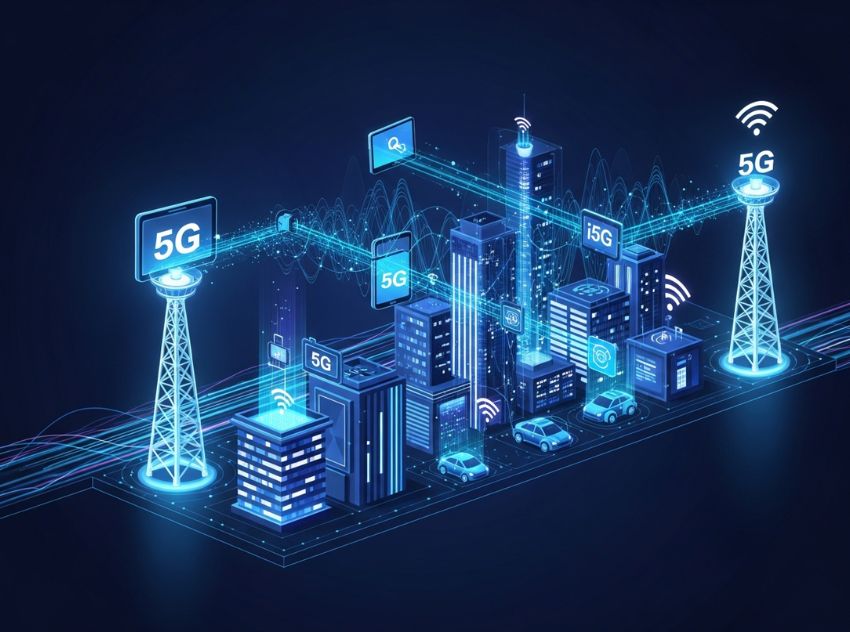
Have you ever thought about why businesses are struggling to scale? Obviously, several reasons come to mind, but one of the major reasons is slow networks and unreliable connections, which hold everything back. Plus, the smart devices are also failing to communicate in real time. This is the reason that pushes 5G connectivity to hold the spotlight to fulfill the demand for faster and more reliable networks.
As we all analyze that people, devices, systems, and everything depend on smooth communication, current networks are not enough to support the speed and requirements of modern technologies. Now 5G is transforming the industries and supporting the powerful innovations like real-time data processing and autonomous systems.
What Is 5G?
As we know, wireless technologies are upgrading decade after decade. Previously, we were using 3G, then 4G came, and now we have 5G, the fifth generation. The purpose of creating this technology is to provide faster speeds, lower latency, and have perfect capacity than previous generations.
If we compare it to the previous technology, 4G, then 5G allows real data transmission. That makes the communication faster and more reliable. The advanced technologies that 5G uses are: 5G New Radio (NR), Massive MIMO, and millimeter waves (mmWave).
Moreover, 5G and IoT connectivity are becoming more powerful because of connecting several devices with each other at once. This will be done without losing performance, supporting smart devices, sensors, and automated systems that completely rely on a stable internet.
According to a recent industry report, there were about 354 commercial 5G networks deployed worldwide as of 2025, and global 5G connections reached over 2.25 billion, gaining rapid adoption across regions.
What are the Key Features of 5G and How They Enhance Connectivity?
After understanding the basic overview of 5G Connectivity, now it’s time to know the main features that are part of accelerating the speed and connectivity.
Ultra-High Speed and Low Latency
The first feature that we will discuss about this technology is its ultra-high speed and low latency, which allows users to move large amounts of information in real time without any delay and with fast speeds. The following process enhances user experiences, including video streaming, online gaming, and cloud applications.
Increased Bandwidth and Capacity
One of the best features that is personally impressive about this technology is that it supports or connects billions of devices without slowing down the performance. And that feature is really important for crowded areas like stadiums, industrial zones, and smart cities.
Network Slicing and Custom Connectivity
Network Slicing is a kind of 5G technology that allows a single network to be divided into multiple virtual networks. And each network is proposed specifically for needs, such as speed, security, and low latency.
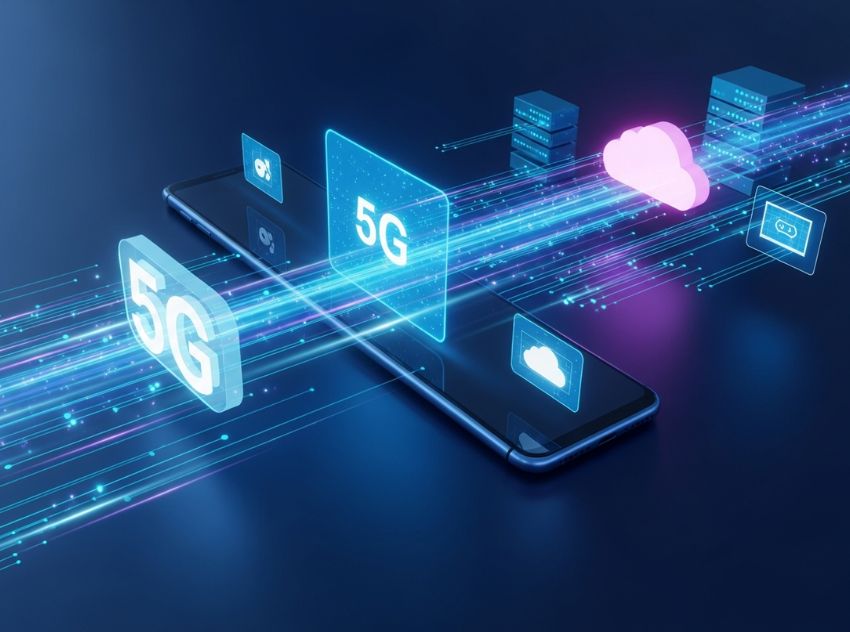
What is IoT connectivity ,and how 5G accelerates IoT evolution?
5G and IoT connectivity is one of the best and most powerful combinations of fifth-generation networks, which enables smarter, faster, and more reliable communication between machines. IoT is already connecting millions of devices, whereas 5G boosts its evolution by removing the limitations of speed, limited network capacity, and high latency. This overall process allows systems to operate in real time with larger scale.
With the use of 5G, the networks can support a large device density, which means billions of sensors and connected devices can easily work without any congestion. The ultra-low latency feature ensures instant data exchange that is critical for automated systems, robotics, and time-sensitive operations.
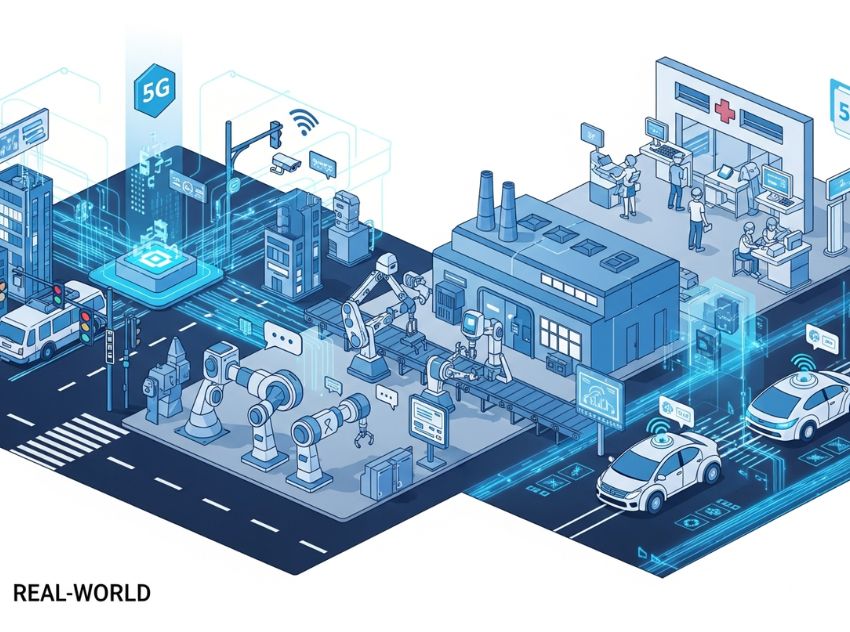
If we talk about the impact of this technology across industries, then the transformation is visible. The smart sensors manage the performance of equipment in manufacturing. Automated systems optimize logistics and supply chains. And smart cities manage traffic, energy, and public safety more efficiently.
When you start combining the technology with AI-driven automation, Agentic AI uses next-generation connectivity. It allows IoT networks to become more intelligent and capable of making real-time decisions without any human intervention.
What is the Impact of 5G Connectivity in the Real World?
In this section, we will understand the major impact of this wireless technology on industries, businesses, and how they are transforming the customer or user experience.
Industry Use Cases
- 5G connectivity might be a game-changer for industries, especially for smart cities, manufacturing, transportation, and healthcare.
- It allows remote monitoring or machines to track the report in real-time, which ultimately enhance the efficiency and safety.
- If there’s a situation where urgent response is required like public safety networks and autonomous vehicles, they all depend on low latency.
Business and Enterprise Benefits
- If we talk about businesses then 5G enhances the overall broadband of mobile which provide stable internet and ensure connectivity.
- Companies can use cloud tools, remote work systems, and real-time applications more frequently with the help of this technology.
- Additionally, the operational efficiency gets improved because of more data insights and insights that’s why decision-making becomes faster.
Transforming Consumer Experience
- Consumers are really happy as they use the 5G network and get stable and smooth online experiences.
- Users who do video gaming, online streaming, and technologies like AR and VR kab use without any lag.
- Cloud gaming and high-quality video streaming becomes more responsive and enjoyable.
What is the Future of 5G and Next-Gen Connectivity?
6G research is now in its early stages but it becomes more important for future connectivity. As 5G improves speed and latency, 6G focuses on intelligent networking, ultra-fast data transfer, and seamlessly connecting everything. The purpose of this process is not only to provide faster internet, instead it creates smart and self-optimizing networks.
The advancements that we expect in the upcoming years are ultra-board connectivity, AI-driven network management, and real-time decision making. Advanced technologies like Generative AI become more intelligent and adaptive. Systems will analyze data itself and optimize the overall performance as well.
Conclusion
5G Connectivity making the industries, businesses, and real world faster, providing stable internet, and low latency. IoT is driving the future innovations and in the upcoming decade, you will see 6G wireless technology as well. If you want to know more about technologies or businesses, you can visit XpertGuider, where you get recent updates and informational guides.
FAQS
What makes 5G different from previous network generations?
5G connectivity offers faster speeds that are useful for businesses, video gamers, live streamers, and more. Plus, it offers low latency.
How does 5G and IoT connectivity benefit industries?
They provide a lot of benefits to several industries by providing real-time communication, remote monitoring, automation, and much more.
Is 6G expected to replace 5G soon?
No, 6G is still in the research process and it takes time maybe years to develop, which means 5G will continue and supporting advanced technologies.