In today’s world, the majority of businesses are facing a common problem: systems can analyze the whole input/data quickly, but they can’t take any action and must wait for that input to take action. Imagine there’s an AI tool named Agentic AI that takes input once, plans and sets the goal, takes action, and provides results without any further inputs. Sounds great, doesn’t it?
One of the biggest gaps in the market is related to intelligence and execution, which is why organizations are thinking that AI tools are enough because the workflows become more complex and decisions take more time. In that case, Agentic AI is such a software that goes beyond your expectations, takes full responsibility for the output result, and adapts according to the situation. Let’s take a deep look at this software’s features, benefits, risks, and its future in the industry.
What is Agentic AI?
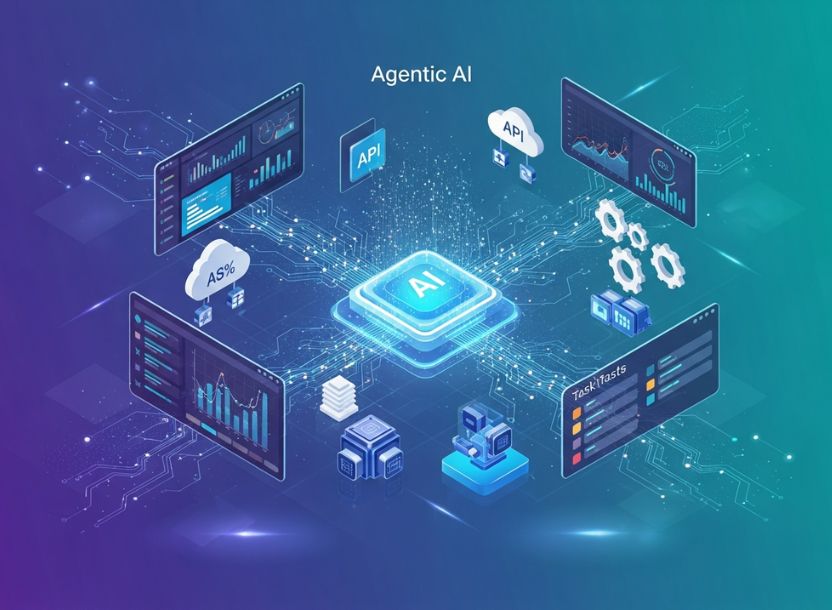
Agentic AI is defined as an AI system that makes plans, sets goals, and takes actions on one input. They don’t just provide input on direct commands, instead they take full responsibility and move the continuous workflow autonomously within defined limits.
Let’s understand this term with an example: consider an e-commerce company that uses AI to manage its workflow. The system will not just manage inventory, it predicts shortages, place the orders that are near to finish, and notify teams immediately about it.
So, when you have complex operations, these systems can take the burden off you.
Recent industry research shows that 79% of companies are already adopting agentic AI to some degree, with many planning to scale implementations soon.
Why Companies Need Agentic AI?
The majority of the companies are considering AI systems that don’t just analyze the data and wait for recommendations or input. They want to predict everything and provide results on one output. They’re like Why do we provide supervision to the AI systems when we invest so much money to buy it.
So, Agentic AI helps companies by automating their complex operations, monitoring, execution, and optimizing everything according to the situation. Moreover, it allows teams to only focus on the strategic work while improving speed and reducing human error and operational costs.
How Agentic AI Works?
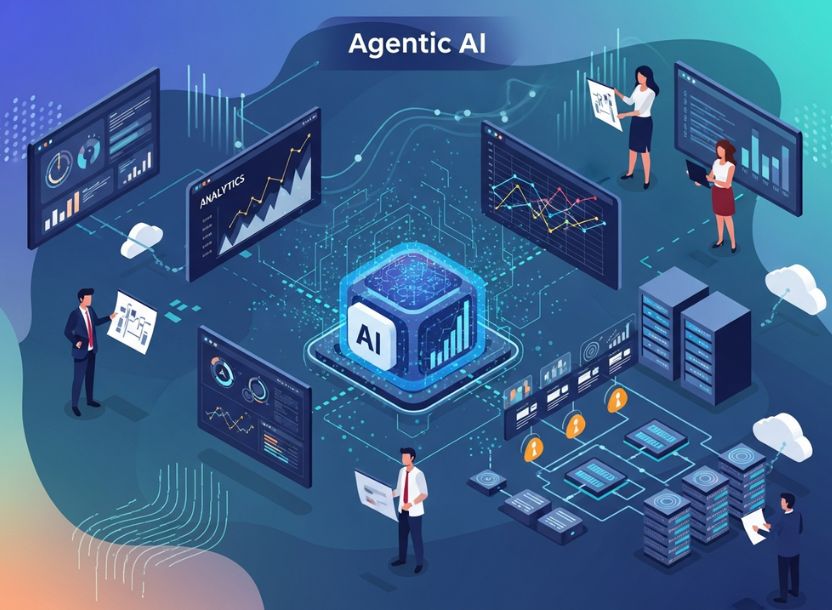
After understanding Agentic AI, its importance, and why companies use it, it’s time to take a look at how this AI system works. So, first of all, when you define the goal and mention the boundaries that the system must follow, it connects your prompt with tools.
Agentic AI uses LLMs like Claude, GPT-4, and more to plan the overall task, and it uses orchestration tools such as LangChain or AutoGen to break down your goal into smaller tasks. Moreover, it uses APIs, databases, and automation tools (CRMs, cloud services, RPA tools) to execute actions based on your goals. That’s how Agentic AI takes action, monitors the output, and adjusts or changes its approach based on feedback. Human involvement is required when it comes to high-risk decisions.
Key Features of Agentic AI
- The purpose of designing these systems is to work according to the defined objective without providing repetitive human instructions.
- They break down the complex tasks and manage multi-step processes that traditional automations cannot do.
- They use real-world, authentic enterprise tools to take actions, including workflows, updating records, and sending notifications.
- Agentic AI analyzes the outcomes itself and adjusts its approach based on the real-time feedback.
- They improve the overall performance of operations in the organization without more supervision.
What are the use cases of Agentic AI?
- Enterprises & Operations Teams: Agentic AI helps large organizations and teams by managing overall operations, monitoring their systems, coordinating tasks across departments, and executing decisions.
- IT, DevOps & Engineering Teams: It helps them by finding the root cause of a problem and providing an automated solution to it that improves the response time.
- Customer Support & Service Organizations: These systems can handle several customer requisitions and resolve tickets maintaining the service quality consistent at a large scale.
Risks and Mitigation
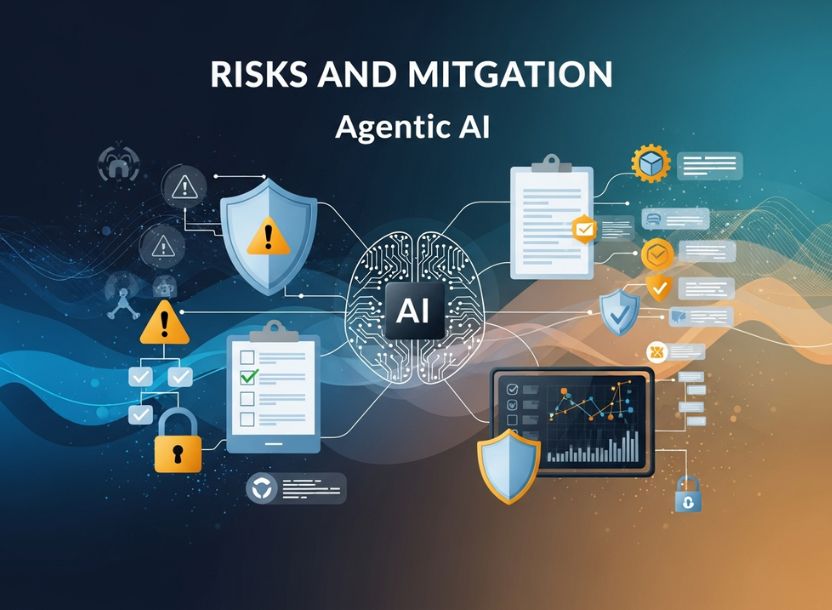
Just like everything has pros or advantages, there’s a disadvantage that also comes when you start using that thing, and you must know those risks and how to avoid them. So, let’s discuss some of the risks and mitigation when you start using Agentic AI.
- These systems can take wrong actions which negatively impact operations, so you have to always set strict boundaries and a checklist of approval when it comes to making high-level decisions.
- It uses large enterprise tools, which might risk your organization’s security or data being leaked. So, continuously monitoring, secure APIs, and less privileged access are required.
- The hidden decision-making of Autonomous AI Agents will create complexity in understanding the specific actions. So you can manage it by learning about tools, taking audit trails, and reviewing performance on a regular basis.
What is the Future of Agentic AI?
The future of Agentic AI is bright and shining because there’s a shift of systems from a reactive to a proactive approach. Organizations will start integrating Agentic AI systems as they enhance the human-AI collaborations, where AI will manage executions and teams focus on strategic work. So, it will become a core operational factor across several industries in the future.
Conclusion
Agentic AI is a system that gets one input and sets a goal, makes a plan, and breaks those goals into smaller tasks by using various professional enterprise tools. They require less human involvement and don’t require more inputs or recommendations to execute further and provide the output by making decisions. The AI agents for businesses are required to fast their workflows, improve performance, and save operational costs.
FAQS
What is the difference between Agentic AI and Traditional AI?
Agentic AI systems achieved goals, and traditional AI systems only analyze data and provide recommendations.
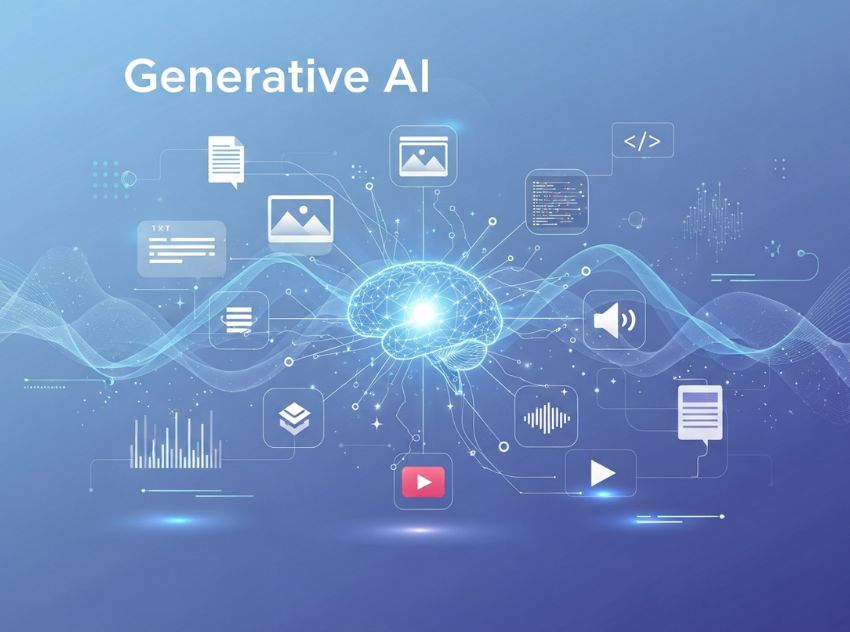
What is the difference between Agentic AI and Generative AI?
Generative AI is helpful for creators as it creates content, whereas Agentic AI acts anonymously and makes plans, executes tasks.
Can Agentic AI replace humans?
No, any AI system will never replace humans because human involvement is required when it comes to high-risk decisions.