Blooket has completely taken over classrooms in recent years. Teachers love using it, kids genuinely enjoy playing it, and parents are sitting there wondering whether this platform is actually okay for their child. If you have found yourself searching about Blooket safety late at night, trust me, you are in good company. Without any sugarcoating, this article tells parents what they really need to know about privacy settings and real risks.
What Exactly Is Blooket and Why Do Kids Love It So Much?
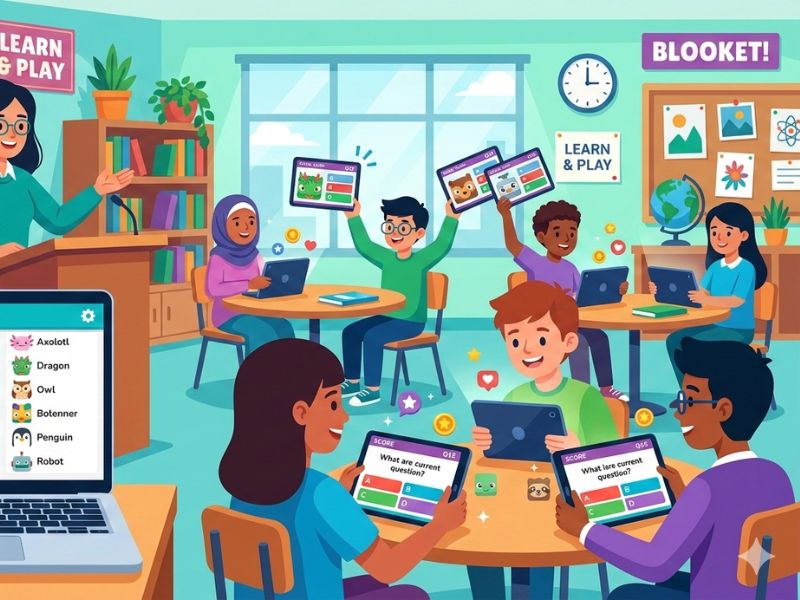
An online game-based learning platform is Blooket. Students earn rewards and collect cute characters known as Blooks for answering quiz questions. The competition against their classmates feels real-time, making it appear like a video game, rather than sport.
Everything is created by teachers through a dashboard. They prepare a multitude of questions, select a game mode, and host a live session for their classes. Using a simple game code, the Students join and start playing from any available device. The entire experience of playing Blooket is fast, colorful and actually fun for kids.
That’s exactly why children are obsessed with it. “Studying this does not feel like studying.” It’s akin to gaming. But, once your child begins to use any online platform regularly, it is perfectly reasonable for you to investigate a little further and ask the tough questions about who sees their data and whether the place is actually safe.
Is Blooket Safe? Here Is the Straightforward Answer
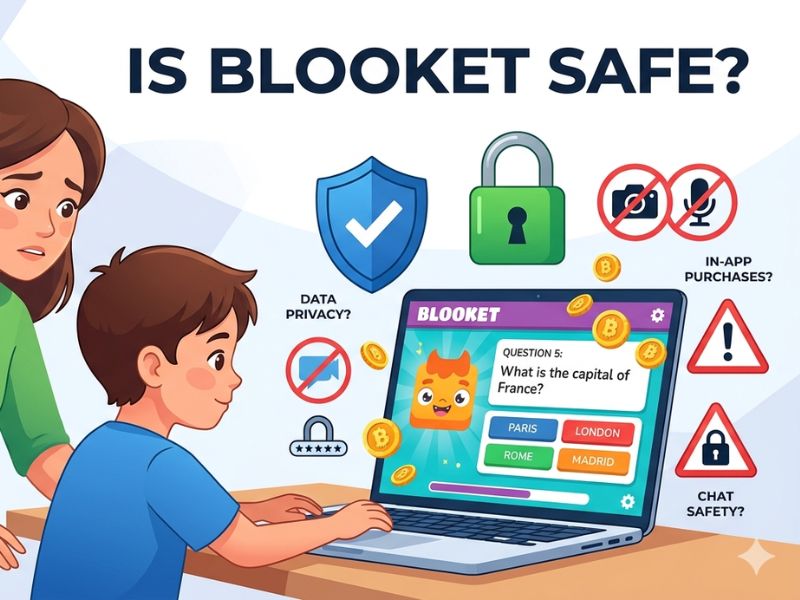
Is Blooket safe? For most school-age children, yes, especially when a teacher is running the session. That answer comes with some important context though.
Blooket was created with students in mind. It was not conceived as social media, and that subtlety matters a lot. There are no public profiles, no friend requests and no DMs between students, and no comment sections through which unknowns can contact your child. Even just those few missing features make Blooket more superior than most platforms kids are using nowadays.
Whether it is kept secure depends on its usage, who the host is, and if any of the basic privacy measures are being followed at home and school.
Blooket Security: What the Platform Actually Does to Protect Kids
Account Creation and Age Rules
Blooket requires anyone creating an account to be at least 13 years old. This follows COPPA rules, which is the United States law protecting children’s online privacy. Kids younger than 13 do not need an account at all. Students can enter the coded Blooket game provided by the teacher to join. No email, no registration, no personal information required. That setup is genuinely thoughtful from a Blooket security perspective.
No Chat, No Messaging, No Social Feed
This is probably the biggest thing parents want to hear. Blooket has no chat feature during gameplay. Students can neither send messages to each other nor post in public nor speak to unknowns on this service. While Live, the player can see the usernames and scores of other players in the scoreboard. That’s it. Nothing more.
That kind of intentional limitation is actually a strong sign that the platform took child safety seriously when building it out.
Game Code Access Only
Every single Blooket game runs on a unique code. The Blooket host, usually the teacher, generates that code and shares it only with their students. There is no open lobby. There is no way for a random person to wander into your child’s game session. You either have the code or you are not getting in. Simple and effective.
Data and Privacy Practices
Blooket does collect some data. For registered accounts, the information comprises username, email and gameplay history. According to the site, it does not sell personal information to third parties and it complies with COPPA for younger users.
Here is the honest part though. Blooket is free to use at the basic level, which means advertising plays some role in how the business runs. Some level of data analysis is almost certainly happening behind the scenes, as it does with nearly every free platform online. Reading the full privacy policy before letting your child create an account is always worth your time.
The Blooket Dashboard: What Parents Should Understand
The Blooket dashboard is where teachers manage everything. They build question sets, review past sessions, see which students participated, and track performance over time. It is entirely focused on learning and classroom management.
Student data in the dashboard is connected to usernames, not necessarily real names. That is an important detail. If your child registered with their real full name, you are able to see that name on the teacher records and in-game leaderboards. Help your child pick a neutral username that will not disclose their identity. It is a simple and effective step that adds privacy.
The performance data teachers see through the Blooket dashboard stays within the educational context. It is not shared publicly and is not accessible to other students.
Real Risks Parents Should Still Know About
Saying a platform is safe does not mean ignoring the parts that need attention. Here are the areas worth watching.
Usernames on the Leaderboard
Everyone can see the usernames of all the players on the leaderboard in every session in Blooket. Usually the kids in school set their usernames as rude, inappropriate or weird. Most teachers notice this quickly, but it does happen. Having a brief chat with your child about picking a sensible name helps a lot.
Public Question Set Library
Blooket allows teachers and registered users to publish question sets to a shared library that others can use. Content moderation does exist, it is not perfect. Sometimes we let an inappropriate or poor-quality question set through. The educators are supposed to check the quality of all the content before they use any material in class. So, it is a completely valid question to query your child’s teacher about where their content comes from.
Screen Time at Home
This one is not about security, but it still matters. Because Blooket is actually fun, kids will sometimes play it on their own at home well beyond what any school assignment requires. Setting clear limits around independent Blooket play at home is just good sense.
Simple Steps Parents Can Take Right Now
Be sure to discuss your child’s username and take necessary actions and steps to ensure it doesn’t have their real name. Show them how to check and change their privacy settings for their account. Reach out to the teacher and ask for help on how they use Blooket in the classroom, what questions they’re playing, and how they’d monitor the sessions. If an account used by your child under age 13 is online, keep an eye on it. Set a reasonable time limit if they play independently outside of school. None of these steps take long. All of them make a real difference.
Conclusion
Blooket is honestly one of the better-designed educational platforms out there from a safety standpoint. The closed game code system keeps strangers out. The lack of any messaging feature removes a huge category of risk. The COPPA compliance and no-account option for younger kids show that safety was part of the design, not an afterthought. When a teacher is running the Blooket host session and keeping an eye on things, the environment is about as controlled as an online platform for kids can reasonably be.
The missing piece to the puzzle is you being a parent. If you know how the Blooket dashboard works, what is being collected through it, and just staying aware with your child about their activities on the platform, it certainly makes it safe. Blooket provides you with solid groundwork to start from.
Frequently Asked Questions
Q: Is Blooket safe for younger kids in elementary school?
Yes, particularly when they join without an account. Kids under 13 can participate using just a game code and share no personal information at all.
Q: Can strangers message my child through Blooket?
No. Blooket does not have a messaging or chat option, meaning that outside contact through the site is not possible.
Q: Does my child need an account to play?
No. Students can join any session with just a game code. Account creation is optional and only required for saving progress or accessing personal features.
Q: Does Blooket sell kids’ personal data?
Blooket’s privacy policy states that the user’s personal data is not sold to third-parties.
Q: What is the minimum age for a Blooket account?
13 years old, following standard COPPA requirements.