Educators are constantly on the lookout for improved student engagement methods. Educational games are on the rise to make that job a little easier. The debate of blooket vs kahoot is one that comes up constantly within teacher communities, Facebook groups, and school staff rooms. Both platforms are really good. However, the two systems are different in terms of function, feel and classroom needs.
Let’s deconstruct it all honestly.
What Is Blooket?
Blooket is a game-based learning platform that helps the students and teachers in making the learning an enjoyable experience. The teacher is a blooket hosts, sets up the session and shares a blooket code with the class. To get into Blooket Play, students only need to enter the code.
Simple enough. But here’s what makes blooket different from everything else.
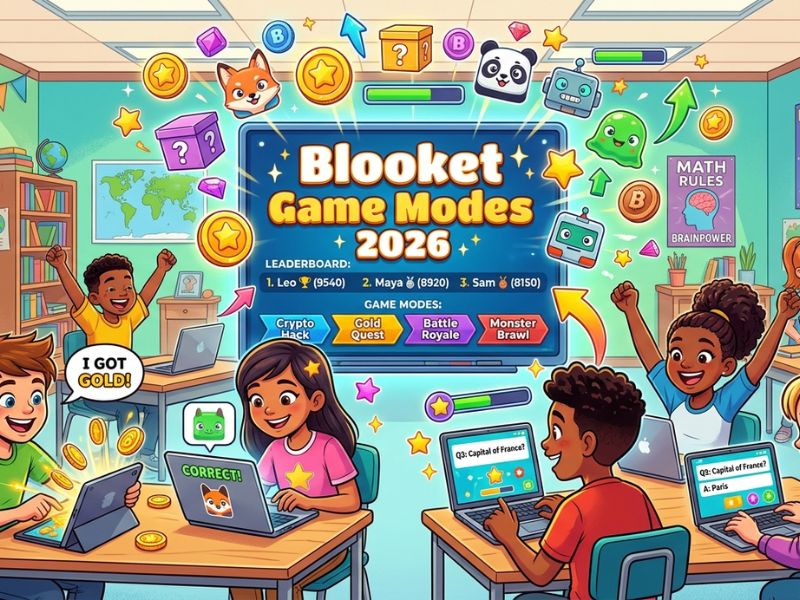
Instead of one game format, blooket offers over a dozen completely different game modes. Games such as Tower Defense, Gold Quest, Crypto Hack, Factory, Fishing Frenzy, etc. While all three modes ask the same questions, they each offer a different experience. Pupils additionally gather characters known as “blooks” and get in-game currency. That little reward loop really keeps kids engaged, not just putting up with it.
What Is Kahoot?
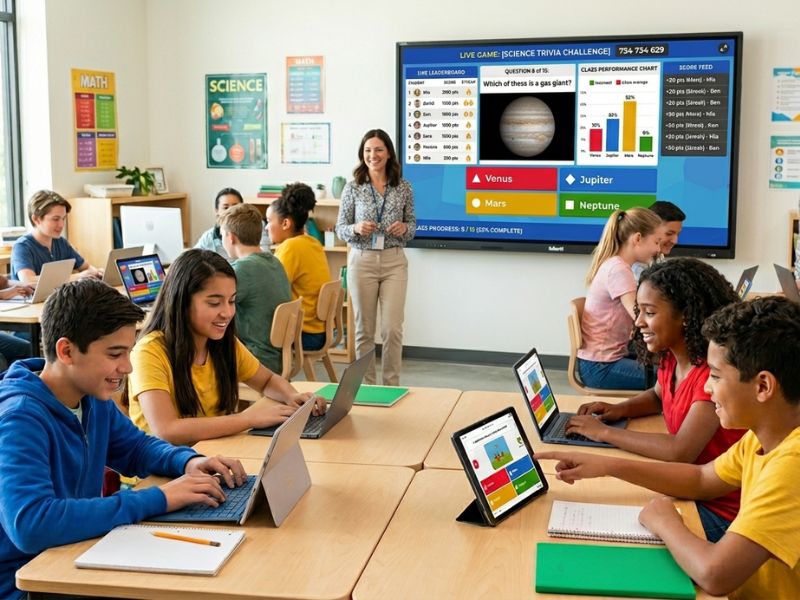
Kahoot is an even older application, and it is probably the first name that comes to mind when anyone mentions a “classroom quiz game”. It has a multiple-choice format where students answer questions on their phone or computer. Your speed and accuracy will earn you points. After each question, a leaderboard is shown.
It has amazing energy and intensity and gets the crowd hyped up quickly. Teachers have relied on that energy for years and it’s a real thing! It is very minimal to set up and hardly anyone is unable to run a Kahoot session.
Blooket vs Kahoot: The Real Differences
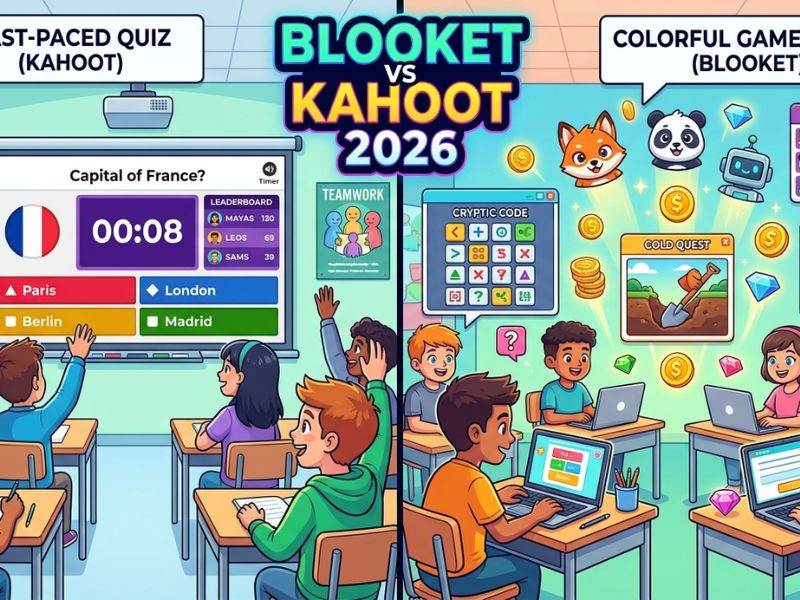
Comparing Blooket and Kahoot Means Looking Deeper Than the Surface. They both actually quiz games . The daily experiences of teachers and students are, however, quite different.
Game Variety
This is the biggest gap between the two. The blooket game library of modes means students never feel like they’re doing the same thing twice. One day it’s a tower defense game. Next week it’s a gold heist. Same questions, completely different vibe.
Kahoot sticks to its format. There are minor variations but the core experience stays the same every time. Students answer, scores update, leaderboard appears, repeat. For occasional use, that works perfectly. For regular classroom use, it starts feeling old.
Student Motivation Over Time
Kahoot creates a spike of energy. Students get excited, especially the first few times. But that excitement does fade with repetition. The format never changes, so neither does the feeling.
Blooket holds attention longer. The blooks, the collectibles, the different game modes, these things give students something new to look forward to. Kids who normally check out during review activities actually stay focused when a blooket game is running. That’s not a small thing.
Ease of Setup
Kahoot is genuinely easier to set up for first-timers. The interface is clean and the path from “create quiz” to “students are playing” is short. There’s almost no learning curve at all.
Blooket takes slightly more exploration. As a blooket host, you need to understand which game modes fit which situations. Some modes work better for competitive classes, others suit collaborative learning. That extra layer is worth learning but it does take a session or two to feel comfortable.
Classroom Games for Different Goals
They both function as classroom games but for different moments. Kahoot is suitable for an energizing quick five-minute warm-up or wrap-up. It’s competitive and grabs attention of audience.
Blooket fits longer review sessions much better. Some game modes take fifteen to twenty minutes and students stay locked in the whole time. It also works well when you want a mix of competitive and collaborative energy in the same room.
Tracking Student Progress
Kahoot produces solid reports. After a session, teachers can see which questions stumped the class, how fast students responded, and download everything to a spreadsheet. For formal assessment or parent communication, those reports are genuinely useful.
Blooket also shows post-game data broken down by student and question. It’s helpful but slightly less detailed on the free plan. Both give you enough to adjust your teaching based on what students got wrong.
Pricing
Both have free plans. Kahoot’s free version has become much more limited over the years. Some functionalities that were free are now locked behind a paywall subscription.
Blooket’s free plan is more generous. Most game modes, question sets, and basic hosting features are available without paying anything. For teachers working without a budget, that matters a lot.
When Blooket Makes More Sense
Use blooket when you’re doing repeated review over several days. When your students have played Kahoot a hundred times, use it so they can play something new. Use it when you want students to feel like they are playing a game rather than putting up with a quiz. Utilize it when funds are lacking and you require complete functionality without payment.
When Kahoot Makes More Sense
Kahoot is great for short, one-time review sessions or when introducing a new group of students to gamification for the first time. It is also a good choice if you need detailed data exports post-session. And if your students have never used either platform, Kahoot’s simplicity makes the first experience smooth.
Blooket vs Kahoot: Which One Wins?
Truthfully, Blooket vs Kahoot is something we are all interested in. It relies on what you require that day.
For pure variety and keeping students engaged week after week, blooket wins comfortably. The different game modes, the reward system, the collectibles, all of it adds up to something students actually want to do. Most teachers who try blooket end up using it more regularly than Kahoot.
Speed, simplicity, and instant energy in the classroom. Kahoot! It is popular for a reason. That quick competitive rush is hard to replicate.
The smartest teachers use both. Kahoot kicks off a unit. Blooket carries the review sessions through the rest of the week. Different tools for different moments.
Conclusion
The blooket vs kahoot query arises as both platforms really do work. They are both not tricks. Real teachers in real classrooms have been helped by both to get students more engaged. Blooket provides endless gaming experiences that you’ll never forget. Kahoot is simple and energizing that always lands. Choose according to your classroom, your student and what that particular lesson demands. Test both options out if you haven’t already, as trying them out is the only way to really know which one fits your style. If you have not tried on both of these pairs of shoes yet, you should definitely try them both out.
FAQs
Q: What is the biggest difference between Blooket and Kahoot?
Blooket offers many different game modes and collectible rewards. Kahoot uses one main quiz format focused on speed and competition.
Q: Is Blooket completely free?
Yes, the free plan covers most features including game modes and hosting tools without any payment required.
Q: How do students join a Blooket session?
Students go to blooket play and type in the blooket code that the teacher shares at the start of class.
Q: Which platform is better for younger kids?
Blooket tends to hold younger students’ attention better because of the characters and game variety. Kahoot works well too but can feel repetitive faster.
Q: Can a teacher use both platforms?
Yes, many teachers use Kahoot for quick warmups and blooket for longer review sessions in the same week.